
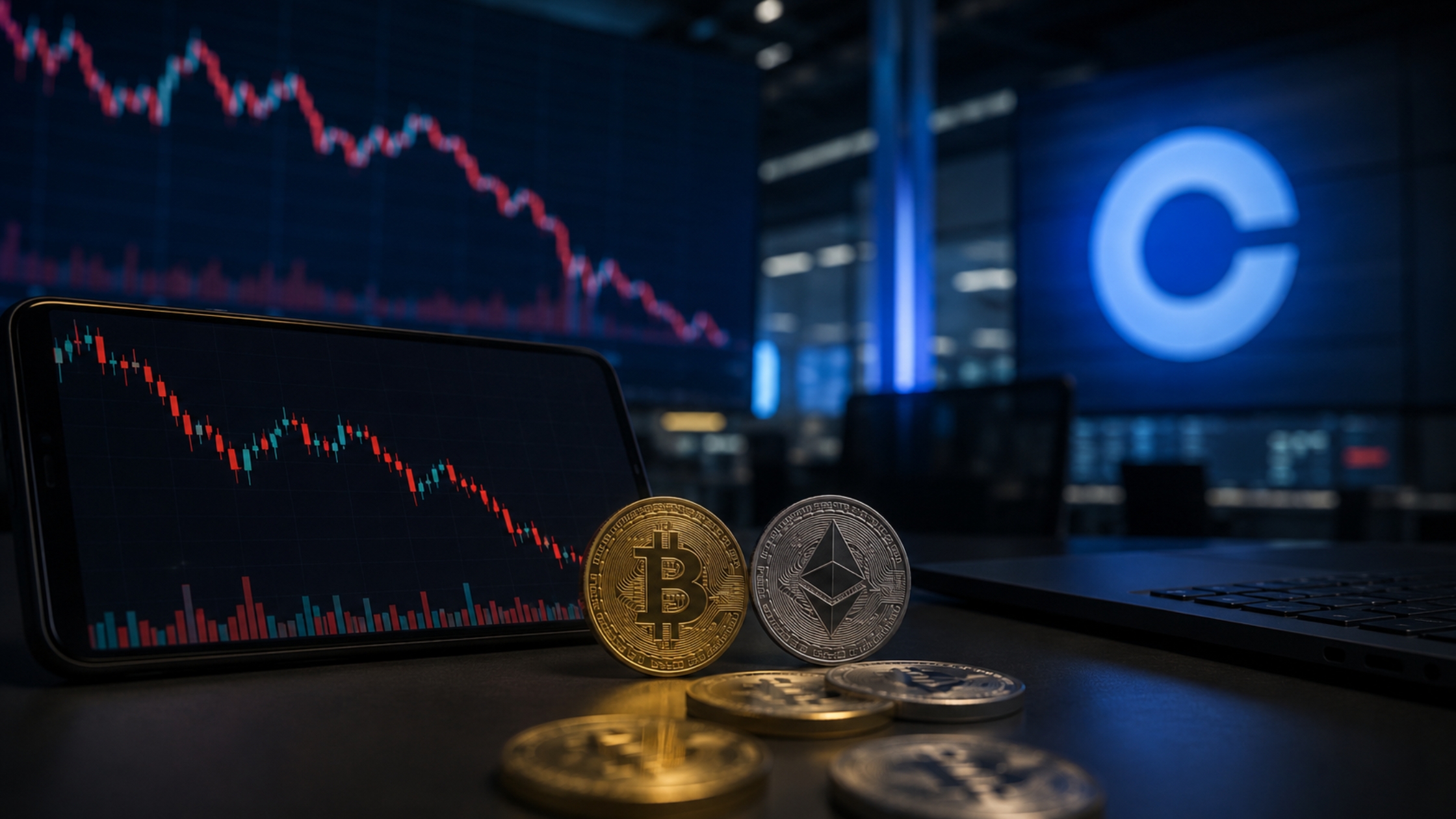
Coinbase Global came under pressure as crypto prices weakened, with COIN shares falling 4.4%. The move reflected a broader risk-off tone across digital assets, especially as Bitcoin slipped toward the $76,000 to $77,000 range. Because Coinbase depends heavily on trading activity, investor sentiment often turns cautious when crypto prices soften and market volumes look uneven.
The decline also showed how closely exchange-linked stocks follow Bitcoin’s direction. When digital assets trade lower, investors expect weaker retail participation, lower transaction volumes, and reduced fee revenue.
Bitcoin Weakness Hits Trading-Linked Stocks
Bitcoin’s pullback remained the clearest pressure point. After earlier liquidation-driven volatility, the market continued trading inside a choppy consolidation zone. This creates uncertainty for crypto equities because weaker price action can reduce trader activity on major exchanges.
For Coinbase, that matters directly. Its revenue model is tied to transaction fees, institutional trading, subscriptions, custody services, and broader market participation. When Bitcoin and other leading assets lose momentum, investors often question whether near-term trading revenue can stay strong. That concern likely contributed to the stock’s decline.
Recent Results Keep Sentiment Fragile
Coinbase’s most recent quarterly update also reminded investors how quickly financial results can soften when crypto activity cools. Strong market cycles often support higher trading volumes, but weaker periods can reduce transaction revenue and pressure margins. This sensitivity makes COIN more volatile than many traditional financial stocks.
The company also announced workforce reductions earlier this month. While cost adjustments can help protect profitability, they may also signal that management is preparing for uneven market conditions. During market drawdowns, such updates can keep investor sentiment fragile, especially when crypto prices are already falling.
Insider Selling Draws Attention
Insider trading activity adds another layer to the conversation. According to the data, COIN insiders made 99 open-market trades over the past six months, with all of them recorded as sales and none as purchases. Chief Financial Officer Alesia Haas, CEO Brian Armstrong, Frederick Wilson, Frederick Ehrsam, Paul Grewal, Lawrence Brock, and Jennifer Jones were among the listed sellers.
Insider sales do not always signal negative expectations, as executives may sell for tax planning, diversification, or scheduled trading plans. However, heavy selling without matching purchases can still make investors more cautious when the stock is falling.
Institutional Activity Looks Mixed
Institutional activity showed a divided picture. Several major firms have added COIN shares in recent quarters, including A16Z, Perennial Management, UBS, Invesco, Goldman Sachs, and Holocene Advisors. These additions suggest some large investors still see long-term value in Coinbase.
However, other institutions reduced their positions. Bank of America and Susquehanna International were among the firms that removed shares. The split highlights uncertainty around Coinbase’s outlook. Some investors appear to be buying the weakness, while others are reducing exposure to crypto-linked equity risk.

Analysts Remain Positive
Despite the recent slide, analyst coverage remains broadly supportive. Several firms have issued buy ratings over recent months, including Needham, BTIG, BofA Securities, and Deutsche Bank. Price targets also varied widely, with recent estimates ranging from $107 to $310 and a median target near $280.
That wide range shows analysts still disagree on Coinbase’s growth outlook, valuation, and sensitivity to crypto cycles.
Conclusion
Coinbase’s latest decline appears tied mainly to weaker crypto prices, softer trading expectations, and fragile investor sentiment. Insider selling and mixed institutional activity added pressure, but analyst ratings remain constructive. For now, COIN’s next move will likely depend on whether Bitcoin stabilizes, trading volumes recover, and crypto market confidence improves.