

The relationship between China and Bitcoin has been continuously evolving, shaped by a combination of regulatory decisions, market dynamics, and shifts in global politics. Over time, China’s policies have had a significant influence on Bitcoin’s growth, often creating both challenges and opportunities within the cryptocurrency space. In this article, we will explore China’s approach to Bitcoin, examining how its regulatory stance has impacted the market. Additionally, we will discuss how the US-China trade deal has played a role in shaping Bitcoin’s price movements and how the broader market has responded to these geopolitical shifts.
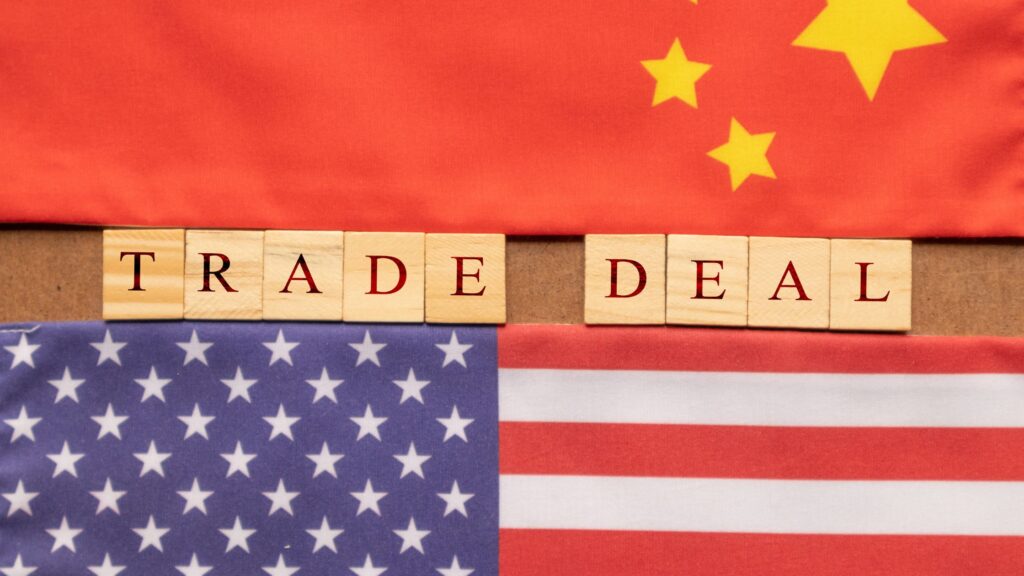
China’s Stance on Bitcoin
China has played a significant role in Bitcoin’s development, both directly and indirectly, with its regulatory decisions shaping the global cryptocurrency market. Here’s a breakdown of China’s impact on Bitcoin:
1. Early Dominance in Bitcoin Mining
China became a dominant force in Bitcoin mining due to its cheap electricity and well-developed infrastructure. At its peak, China controlled over 65% of the global Bitcoin hash rate, making it crucial to Bitcoin’s security and overall market price.
2. Regulatory Crackdown (2017)
In 2017, China banned Bitcoin exchanges and initial coin offerings (ICOs), which led to a reduction in domestic Bitcoin trading activity. This regulatory move caused Bitcoin’s trading volume to sharply decline within China. However, Bitcoin continued to thrive outside of the country as other regions took the lead in cryptocurrency adoption.
3. 2021 Mining Ban
In 2021, China initiated a widespread crackdown on Bitcoin mining, causing many miners to relocate to countries like the United States and Kazakhstan. While this action resulted in a temporary drop in Bitcoin’s hash rate, it also contributed to the decentralization of mining operations, which ultimately strengthened the global resilience of the Bitcoin network.
Despite these regulatory challenges, Bitcoin continues to flourish worldwide. While China’s influence has shifted the center of Bitcoin activity, it has not completely erased its impact on the global market.

The US-China Trade Deal and Its Impact on Bitcoin
The US-China trade deal, especially the Phase One agreement signed in January 2020, has had a profound impact on global financial markets, including Bitcoin. This agreement, which aimed to ease trade tensions between the two largest economies in the world, has influenced Bitcoin’s price in several important ways.
A. Trade Uncertainty Drives Bitcoin
During times of trade tension between the US and China, investors often seek safe-haven assets to safeguard their investments. Bitcoin, which is frequently seen as a store of value during periods of uncertainty, benefits from such circumstances. When trade tensions rise, investors tend to shift their funds into Bitcoin, pushing its price upward as they move away from traditional financial markets and assets that are more susceptible to geopolitical risks.
B. Positive Trade News Leads to Risk-On Sentiment
Conversely, when positive news arises from the US-China trade discussions, it triggers a “risk-on” sentiment in the market. In this environment, investors feel more confident and are more inclined to invest in riskier assets, such as stocks and equities, rather than Bitcoin. As a result, when trade talks progress or signs of an agreement appear, Bitcoin’s price often experiences a pullback as capital flows into higher-risk investments that typically offer higher returns.
C. Indirect Influence on Bitcoin
While the US-China trade deal doesn’t directly address the cryptocurrency market, its broader economic effects influence investor sentiment and overall market conditions. The economic fallout from the trade deal, including shifts in trade policies and tariffs, can change the outlook for global markets and, by extension, affect investor behavior. These changes in market sentiment directly impact Bitcoin, with its price often fluctuating in response to the broader economic conditions and the risk appetite of investors.
Bitcoin’s role as a potential hedge or risk asset is continually shaped by the evolving economic landscape resulting from the trade relationship between these two global superpowers.
Recent Market Movements
Recent developments in US-China trade relations have had a significant impact on Bitcoin’s price, with clear patterns emerging in response to both trade optimism and geopolitical tensions. Here’s how these developments have influenced Bitcoin’s market movements:
- Bitcoin Surges on Trade Optimism: In late 2025, optimism around US-China trade talks pushed Bitcoin’s price above $111,000. Investors, encouraged by the potential deal, sought riskier assets, boosting Bitcoin’s demand and price.
- Volatility Due to Geopolitical Tensions: Geopolitical tensions, like new tariffs or trade war threats, have caused sharp Bitcoin price drops. In these times, investors shift away from volatile assets, leading to a pullback in Bitcoin’s price.
- Bitcoin’s Sensitivity to News: Bitcoin’s price is highly reactive to global news, especially US-China trade updates. As major geopolitical events unfold, Bitcoin’s price fluctuates, reflecting investor sentiment and contributing to market volatility.
Bitcoin’s price has consistently shown volatility in response to US-China trade news, highlighting its susceptibility to external economic and political conditions.
Conclusion
The relationship between China, Bitcoin, and the US-China trade deal is both complex and ever-changing. While China’s regulatory measures have significantly impacted Bitcoin mining and trading within its borders, the cryptocurrency has continued to grow in other regions around the world. Although the US-China trade deal doesn’t directly address cryptocurrencies, it has a substantial influence on Bitcoin’s price due to shifts in investor behavior and the broader market’s reaction to trade uncertainty.
To navigate the complexities of the global cryptocurrency landscape, investors must stay informed about geopolitical events and market trends that can affect the market. For more insights into cryptocurrency and its intersection with global economics, visit Crypto Green Force.