
A strong debate is growing in the crypto space: Canton Network vs XRP — which one will bring institutions fully into blockchain finance?
Some believe Canton Network could replace XRP. Others argue XRP already owns the institutional liquidity narrative. However, this “either-or” thinking misses the bigger picture. Both serve different purposes. In fact, they operate on separate layers of the financial stack.
Let’s break it down in simple terms.

Why DTCC’s Move Sparked the Debate
The Depository Trust & Clearing Corporation (DTCC) processes massive volumes of financial transactions every year. When it began exploring real-world asset (RWA) tokenization using Canton Network, the crypto industry reacted quickly. Many assumed that if Canton supports institutional tokenization, then XRP may no longer be necessary. However, infrastructure and liquidity are not the same thing. That distinction changes everything.
What Canton Network Actually Does
Canton Network launched in 2023 by Digital Asset. It was built specifically for regulated financial institutions. Unlike public blockchains, Canton focuses on privacy and compliance. Institutions cannot operate on fully transparent networks. They require confidentiality, strict regulatory controls, and synchronized data sharing between trusted participants. Canton provides exactly that.
It uses the Daml smart contract language to allow private networks to connect without exposing sensitive information. In other words, it acts as a coordination layer between permissioned blockchains. Its core strength lies in tokenization.
During pilot programs with major financial firms, Canton demonstrated atomic settlement. That means two assets — for example, tokenized U.S. Treasuries and cash equivalents — can swap simultaneously. This reduces settlement risk and improves collateral efficiency. Simply put, Canton builds secure, compliant rails where tokenized assets live and move safely. But it does not aim to become a universal currency bridge.
What XRP Was Designed to Solve
Now let’s look at XRP. The XRP Ledger (XRPL) was created to address a major inefficiency in global finance: trapped capital in pre-funded accounts.
Banks traditionally hold money in foreign accounts to process cross-border payments. This locks up liquidity and reduces capital efficiency. XRP offers a solution.
It acts as a neutral bridge asset. A bank can convert one fiat currency into XRP, send it across borders in seconds, and convert it into another fiat currency. This process removes the need for pre-funded reserves. So while Canton focuses on secure asset custody and synchronized ledgers, XRP focuses on moving value efficiently between different markets. That is a major difference.
Infrastructure vs Liquidity: Two Separate Layers
The Canton Network vs XRP debate becomes clearer when you view them as separate layers.
Canton handles:
- Private ledger synchronization
- Regulatory compliance
- Tokenized asset settlement
- Institutional privacy
XRP handles:
- Cross-border liquidity
- Currency bridging
- Capital efficiency
- Real-time value transfer
A private ledger can record ownership instantly. However, it does not automatically create deep global liquidity. Institutions still need a neutral asset to move funds between jurisdictions. That is where XRP fits.
Why the Replacement Narrative Falls Apart
Some argue that if institutions use Canton for atomic settlement, XRP becomes unnecessary. But this logic ignores liquidity dynamics. Imagine a tokenized U.S. Treasury living inside a permissioned network. A foreign buyer still needs access to USD liquidity. That liquidity must move across borders efficiently. Canton secures the transaction. XRP can facilitate the currency conversion. They solve different problems. Replacing one with the other does not make sense because they do not compete directly.
The Bigger Picture: A Multi-Layer Institutional Stack
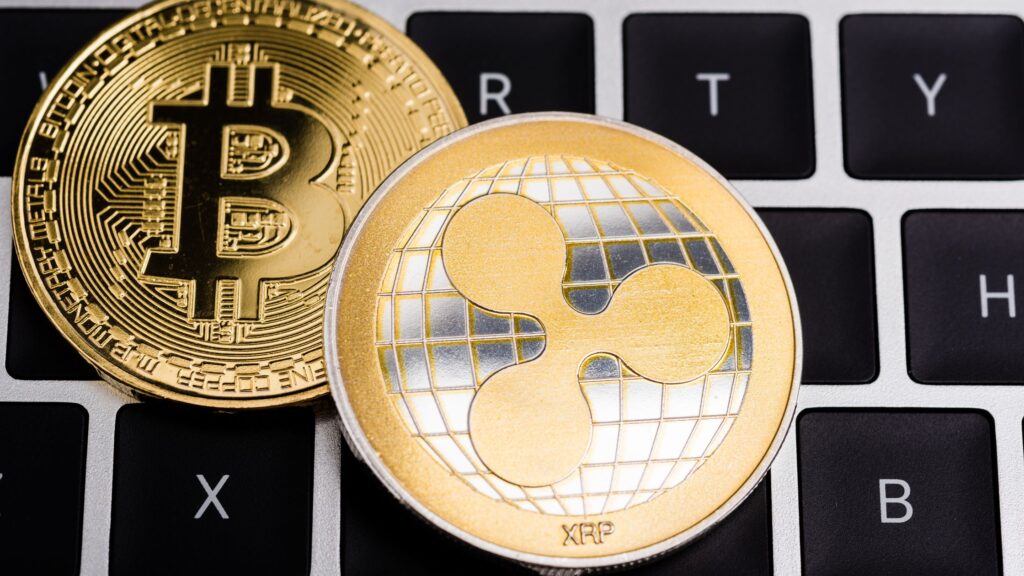
Modern financial infrastructure will likely operate in layers. One layer manages compliance, custody, and private settlement. Another layer handles liquidity and currency exchange. Canton acts like a digital vault and settlement engine. XRP acts like a fast transport bridge between financial systems. When combined, they can support a more efficient institutional ecosystem.
Final Thoughts
The Canton Network vs XRP discussion should not focus on replacement. Instead, it should focus on specialization. Canton builds private, compliant infrastructure for tokenized assets. XRP provides cross-border liquidity and capital mobility. In complex financial systems, multiple tools can coexist. Often, they complement each other rather than compete. As institutional crypto evolves, the future will likely include both secure settlement networks and efficient liquidity bridges working together.