
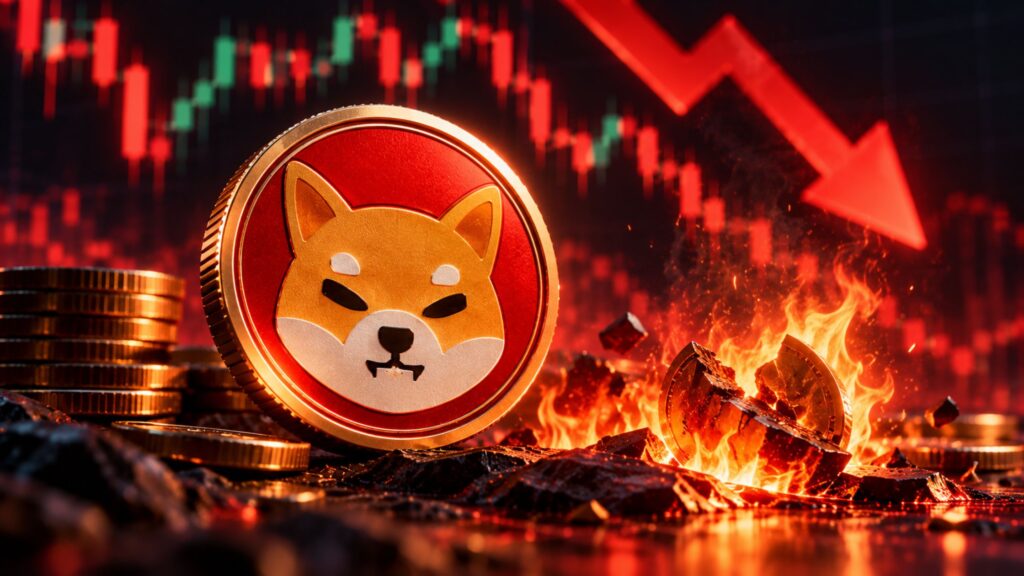
Shiba Inu Price Today is drawing attention after SHIB declined 3.3% to $0.000005011, according to CoinGecko figures cited for October 22, 2026. A steep fall in token-burning activity added to concerns, while developments involving Shibarium and Japan’s Rakuten Wallet gave holders competing signals. The latest move comes amid uncertainty across the broader crypto market, but the available figures do not establish a single cause for the price decline.
SHIB Price and Trading Activity
SHIB’s reported market capitalization stood at $2.953 billion, with $43.748 million traded over 24 hours. Despite the daily decline, the token remained 1.3% higher over seven days. That contrast suggests a short-term pullback rather than proof of an extended downtrend.
For traders following Shiba Inu Price Today, trading volume deserves attention. Volume shows how actively an asset changes hands, although it cannot independently confirm whether buyers or sellers will dominate next. Wider crypto market movements and sentiment can also affect speculative tokens.
Why Did SHIB Burns Decline?
According to figures attributed to Shibburn, daily burn activity fell 93.71% after a previous surge involving approximately $170,366 worth of SHIB. The weekly decrease reportedly reached 82.87%.
Market participants should also carefully distinguish changing burn percentages from the absolute number of tokens destroyed. A dramatic percentage decline may follow an unusually large previous burn, making the comparison look more severe than routine daily activity would suggest at first glance.
Burning sends tokens to inaccessible addresses, permanently reducing available supply. However, a slower burn rate does not automatically trigger a price drop. Price also depends on demand, liquidity, trading behavior and overall confidence.
The report lists approximately 410.85 trillion SHIB burned from an original one-quadrillion supply, representing 41.08%. That historical reduction is substantial, but short-term crypto price movements cannot be explained by supply changes alone.
The burn slowdown is therefore one factor worth monitoring in Shiba Inu Price Today, not confirmed evidence of what caused the 3.3% fall.
Shibarium Network Fix Raises Adoption Questions
A social media post attributed to the Terrarmy account said a significant network reorganization issue affecting Shibarium had been fixed. The development may ease some technical concerns surrounding Shiba Inu’s scaling ecosystem.
Still, fixing infrastructure and attracting users are different achievements. Sustainable progress requires transaction activity, useful applications and consistent network performance. Crypto investors should watch actual adoption metrics rather than treating a reported repair as a guaranteed catalyst for SHIB’s value.
Rakuten Wallet Announces Physical Coin Giveaway
Japanese crypto exchange Rakuten Wallet announced a promotional giveaway scheduled for November 3. At a seminar in Japan, eligible participants who show their SHIB holdings through the exchange’s app can receive a physical, SHIB-branded collectible.
The souvenir is not an additional digital asset, carries no transferable blockchain balance and should not be confused with free SHIB tokens. Its significance lies mainly in community engagement and brand visibility, not immediate changes to circulating supply.
Such promotions can attract publicity, but any sustained effect on market demand remains uncertain.

What Could Influence SHIB Next?
The immediate indicators include trading volume, burn activity, broader crypto sentiment and Shibarium usage. A recovery in burns might renew community interest, while expanding on-chain transactions could strengthen the network’s longer-term case.
However, neither outcome guarantees appreciation. Sharp price swings remain possible, particularly when risk appetite weakens across digital assets.
Conclusion
Shiba Inu Price Today reflects a 3.3% decline alongside much slower token burns, a reported network repair and a Japanese promotional event. None alone establishes the reason SHIB fell. Investors should weigh verified network activity, liquidity and overall market conditions before drawing conclusions or making decisions.