

The crypto market in 2026 presents caution and opportunity. While the Fear & Greed Index sits at 26, signaling investor fear, the market remains resilient. With a $2.64 trillion market cap and daily trading volume above $76 billion, the ecosystem still shows strength.
Bitcoin remains at the center, maintaining dominance above 58%. Meanwhile, Ethereum holds around 10%, reinforcing its role in decentralized finance. However, a deeper trend is emerging that many investors are overlooking.

Fear in the Market: Risk or Opportunity?
A Fear & Greed Index reading of 26 typically reflects widespread uncertainty. Many investors hesitate to enter the market during such periods. However, historically, extreme fear often signals potential accumulation zones.
Bitcoin currently trades near $76,579, showing slight stability despite market anxiety. This resilience suggests that large players may still be holding positions rather than exiting. Therefore, fear may not indicate weakness but rather a pause before the next move.
Unexpected Altcoin Activity
While Bitcoin dominates the headlines, certain altcoins are showing surprising momentum. Dogecoin has gained over 1% in a single day, driven largely by community activity. At the same time, Monero is attracting attention due to growing interest in privacy-focused assets.
These movements reveal an important signal. Even in fearful markets, capital is not leaving—it is rotating. Investors are selectively exploring opportunities rather than exiting completely.
Macro Factors Shaping the Market
To understand the current crypto environment, it is essential to look beyond charts. Global economic pressures, including inflation concerns and interest rate uncertainty, continue to influence investor behavior.
As a result, risk assets like cryptocurrencies experience slower momentum. However, the fact that the total market cap remains above $2.6 trillion shows that confidence has not disappeared—it is simply cautious.
Bitcoin’s role as “digital gold” becomes especially relevant in such conditions. Its dominance above 58% reflects investor preference for stability during uncertain times.
Technical Signals to Watch
Technical indicators provide further insight into market direction. Bitcoin’s Relative Strength Index (RSI) sits around 55, indicating a neutral position. This means the asset is neither overbought nor oversold, leaving room for movement in either direction.
Additionally, Bitcoin remains above key support levels near $70,000. This is a positive signal, as strong support zones often act as foundations for future growth.
Ethereum, on the other hand, trades near $2,263 with a slightly weaker trend. Its RSI also remains neutral, suggesting hesitation among traders.
What This Means for Investors
For investors, the market presents challenges and opportunities. Bitcoin offers a stable foundation for long-term positioning, while its dominance provides confidence during uncertainty.
Ethereum supports decentralized finance, though volatility remains. For higher-risk investors, altcoins offer speculative opportunities, but hype-driven gains can reverse quickly.
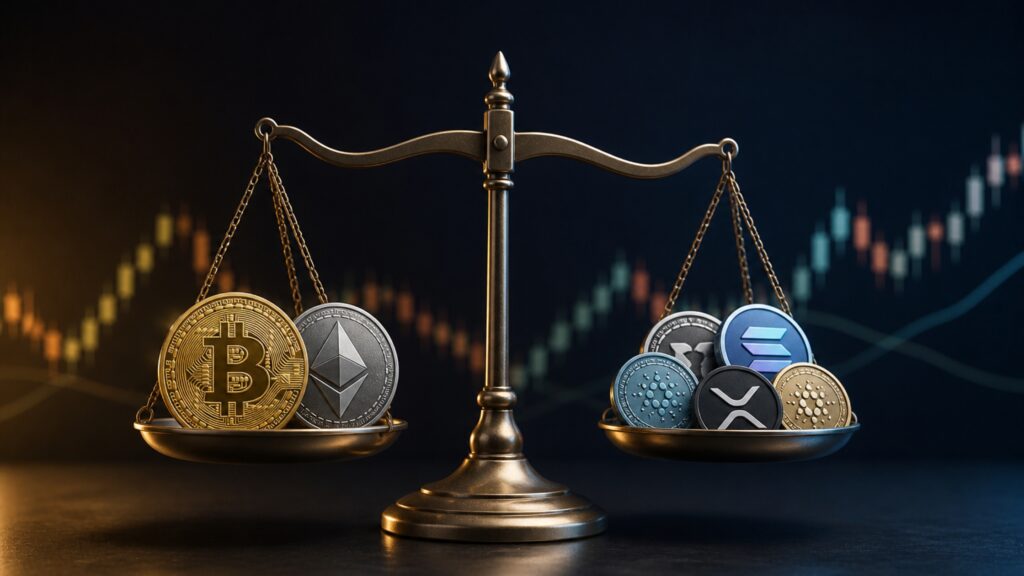
The key strategy is balance. Holding Bitcoin and Ethereum while selectively exploring altcoins can help manage risk.
Future Outlook: What Comes Next?
Looking ahead, market direction will depend on sentiment shifts and macroeconomic conditions. If fear begins to fade, Bitcoin could push toward $80,000 in the coming months.
However, if uncertainty continues, prices may consolidate or even retest lower support levels. Regulatory developments and institutional activity will also play a critical role in shaping future trends.
Conclusion
The hidden factor in today’s crypto market is not just price movement—it is sentiment. While fear dominates headlines, the underlying market remains strong.
Bitcoin’s stability, Ethereum’s utility, and selective altcoin growth all point to a market preparing for its next phase.
For investors, this is a moment to stay informed, stay balanced, and focus on long-term strategy rather than short-term noise.